


Impact Partners
A permanent portion of the MediCube campus network reserved for student support.
Campus Impact gives universities, nonprofits, foundations, alumni, sponsors and grant-funded initiatives a measurable way to fund products, wellness programs and resources students can actually use.
One system. Multiple funding sources.
Student affairs, health services and basic-needs offices fund from budgets they already hold.
Institutional and community foundations fund a defined student-support line and get distribution records for the grant file.
Class gifts and giving-day campaigns attach to a countable outcome instead of a general fund.
Mission partners place their materials where students can reach them without a staff conversation.
A sponsor underwrites a product category, and what the student takes home is something they actually use.
Public-health and state grant lines that need proof of distribution get it from the dispense record.
MediCube reserves its own network capacity for impact programs as an MBE-certified operator.
Finals Week Essentials
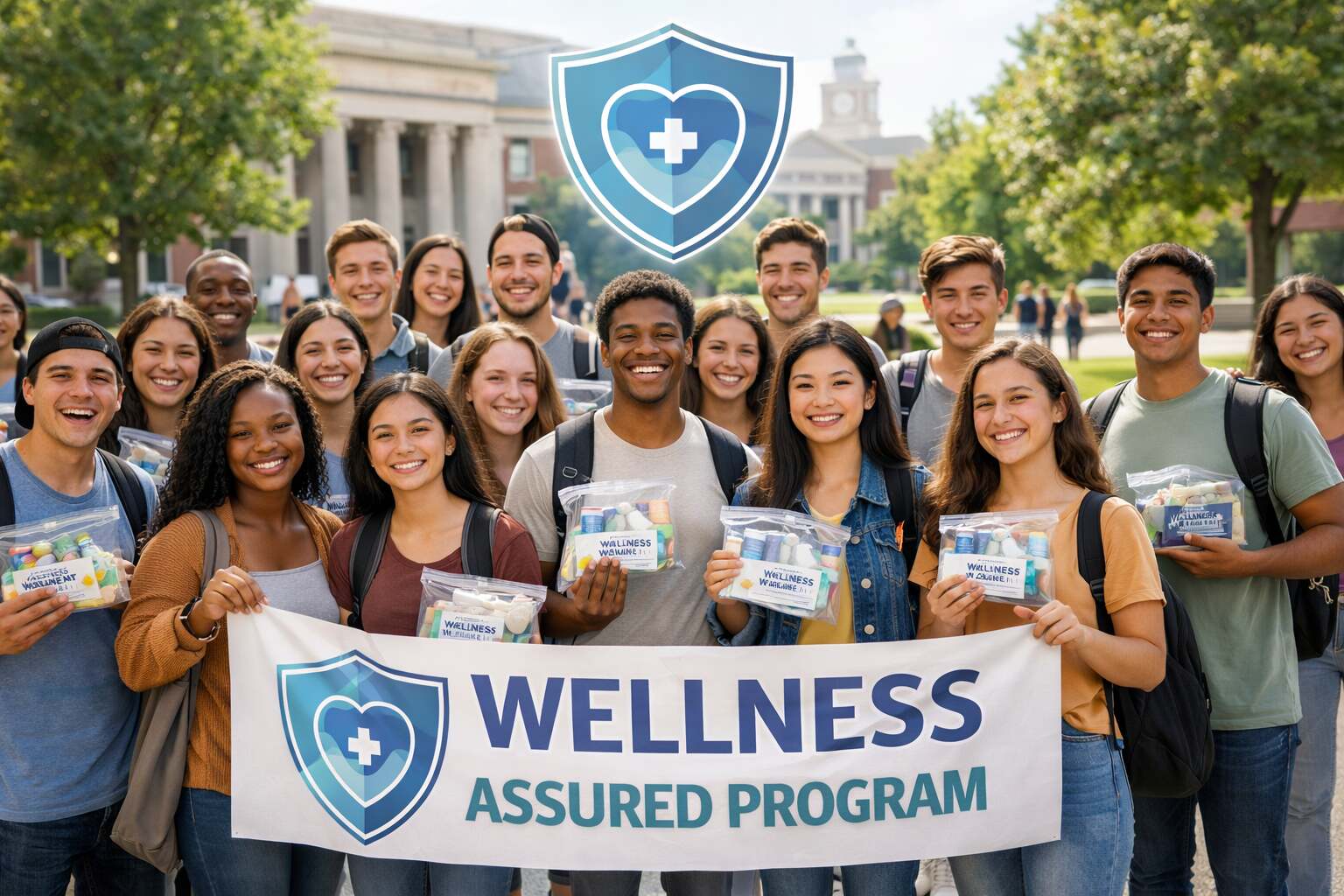
Campaign funded by a partner → student sees a wellness message → student interacts → student claims a sponsored item → MediCube dispenses the product. Reporting can then show the funded products, distribution and participation behind the initiative.
Show what the support actually delivered.
How many products the partner paid for.
How many of those products students actually took.
How many students engaged with the message on screen.
How many students opened the campus resource linked to the campaign.
How many students took part over the life of the campaign.
Sponsor needs that already exist on campus.
Menstrual products available continuously, instead of a basket in one office that runs out.
Food and household essentials on nights, weekends and breaks, when the pantry is closed.
A funded push during the two weeks with the highest demand and the least staff capacity.
Naloxone and instructions reachable without a staff conversation. (Partnered with Lifeline.)
Protection and testing supplies obtained without a front desk in between.
Standing, funded access for students skipping meals — not a one-week donation drive.
Sleep and stress items paired on screen with a direct link to campus counseling.
Late-night safety essentials, with the campus escort or ride program shown at the moment a student heads out.
Same-hour access to essentials for a student in an acute gap.
Targeted programs for students navigating campus without a family safety net.
A named, countable outcome for class campaigns — units funded and units delivered.

Support becomes visible, accessible and measurable at the point of need.
The objective is not to turn student support into advertising. It is to give funding partners a controlled campus channel where a message can connect immediately to a useful product, service or resource.